
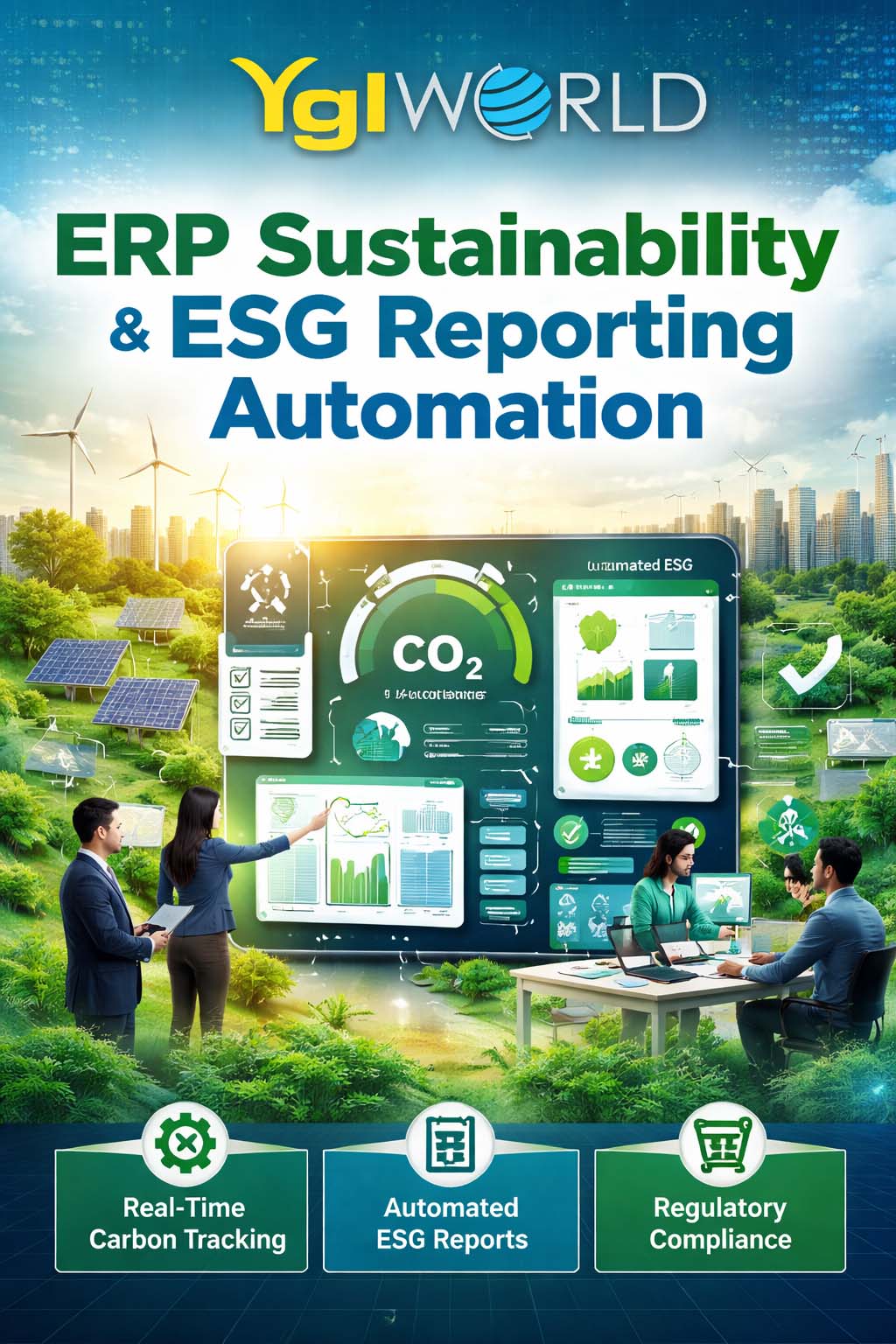
Introduction: Why ERP Sustainability Matters Today
Environmental, Social, and Governance (ESG) reporting is no longer optional. For Bursa-listed companies and multinational enterprises, sustainability reporting has become a regulatory, investor, and reputational requirement. Yet many organizations still struggle with fragmented ESG data, manual carbon calculations, and unreliable reporting processes.
This is where ERP sustainability plays a critical role. By integrating ESG reporting automation directly into ERP systems through intelligent middleware, companies can transform sustainability from a compliance burden into a strategic advantage.
In this article, we explore how automated ESG carbon calculation with ERP middleware enables organizations to achieve accurate, auditable, and scalable ESG reporting.
What Is ERP Sustainability?
ERP sustainability refers to embedding ESG data collection, carbon accounting, and sustainability analytics directly into an organization’s Enterprise Resource Planning (ERP) system. Instead of treating ESG as a standalone process, sustainability becomes part of daily operations.
Key Characteristics of ERP Sustainability
- ESG data captured from operational transactions
- Automated Scope 1, Scope 2, and Scope 3 calculations
- Real-time sustainability dashboards
- Audit-ready ESG reports aligned with regulatory frameworks
ERP sustainability ensures that ESG data is not estimated manually but derived directly from verified business activities.
ESG Reporting Challenges Without ERP Integration
Many companies attempt ESG reporting using spreadsheets, emails, and disconnected systems. This approach creates significant risks.
Common ESG Reporting Pain Points
1. Fragmented Data Sources
Energy usage, logistics data, procurement records, and travel expenses often reside in different systems. Without ERP integration, consolidating ESG data becomes time-consuming and error-prone.
2. Manual Carbon Calculation Errors
Manual emission factor application leads to inconsistent results, calculation mistakes, and lack of transparency during audits.
3. Lack of Scope 3 Visibility
Scope 3 emissions, especially supplier-related data, are the most complex and frequently underreported due to poor data availability.
4. Compliance and Audit Risks
Inconsistent ESG data increases the risk of non-compliance with Bursa Malaysia, GRI, ISSB, and upcoming regulatory requirements.
These challenges highlight why ESG reporting automation must be embedded within ERP systems.
Automated ESG Reporting with ERP Middleware
What Is ERP ESG Middleware?
ERP ESG middleware acts as a smart integration layer between existing ERP systems and sustainability reporting frameworks. It extracts operational data, applies standardized carbon calculation logic, and produces ESG-ready outputs.
How ERP Middleware Enables ESG Reporting Automation
Automated Data Extraction
The middleware automatically pulls data from ERP modules such as:
- Finance (electricity bills, fuel expenses)
- Procurement (supplier purchases)
- Inventory and warehouse management
- Logistics and transportation
- Human resources and travel claims
Standardized Carbon Calculation Engine
Using globally recognized emission factors, the ERP middleware performs automated ESG carbon calculation for:
- Scope 1: Direct fuel consumption
- Scope 2: Purchased electricity and energy
- Scope 3: Supplier emissions, logistics, and business travel
This eliminates manual spreadsheets and ensures consistent results.
Real-Time ESG Dashboards
ERP sustainability dashboards provide real-time visibility into:
- Carbon emissions by department
- Emissions per product or project
- Supplier sustainability performance
- Year-on-year emission trends
ERP Sustainability for Scope 2 and Scope 3 Emissions
Automating Scope 2 Carbon Reporting
Scope 2 emissions are directly linked to electricity and energy consumption. ERP middleware integrates utility billing data and operational usage to calculate emissions automatically based on approved emission factors.
Benefits of automated Scope 2 reporting:
- Accurate monthly and annual calculations
- Reduced dependency on manual data entry
- Faster ESG disclosures
Solving Scope 3 Complexity with ERP Integration
Scope 3 emissions often account for more than 70% of total carbon footprint. ERP sustainability solutions address this by:
- Capturing supplier transaction data
- Categorizing emissions by spend-based or activity-based methods
- Enabling supplier ESG data collaboration portals
This transforms Scope 3 from an estimation exercise into a data-driven process.
ESG Compliance and Reporting Framework Alignment
ERP sustainability middleware supports alignment with major ESG frameworks, including:
Supported ESG Frameworks
- Bursa Malaysia Sustainability Reporting Guide
- GRI Standards
- ISSB (IFRS S1 & S2)
- TCFD climate disclosures
By mapping ERP data to reporting templates, ESG reports become consistent, traceable, and audit-ready.
Business Benefits of ERP Sustainability Solutions
Operational Efficiency
Automated ESG reporting reduces manual workload and shortens reporting cycles from months to days.
Data Accuracy and Audit Readiness
ERP-based ESG data is derived from actual transactions, ensuring data integrity and audit confidence.
Strategic Decision-Making
With ESG data embedded in ERP, management can:
- Identify high-emission cost centers
- Optimize energy usage
- Improve supplier sustainability performance
Competitive Advantage
Companies with strong ERP sustainability capabilities gain trust from investors, regulators, and customers.
ERP Sustainability as a Long-Term Strategy
ESG requirements will continue to evolve. Organizations that rely on manual processes will face rising compliance costs and operational risks. In contrast, companies investing in ERP sustainability and ESG reporting automation are future-proofing their operations.
ERP middleware provides scalability, flexibility, and regulatory resilience, allowing businesses to adapt quickly to new ESG standards.
Conclusion: From Compliance to Value Creation
ERP sustainability is not just about compliance—it is about embedding sustainability into the core of business operations. Through automated ESG carbon calculation with ERP middleware, organizations gain accurate data, operational transparency, and strategic insight.
As ESG reporting expectations increase, ERP-driven sustainability solutions will become a critical foundation for responsible and resilient enterprises.
Internal Linking Suggestions
- Link to: ERP Implementation Services
- Link to: Smart Warehouse Management System
- Link to: ESG Middleware Solution Overview
We look forward to hearing from you. Contact us today so that we can help you with our YGL NERVO which is strategy Industry 4.0 ready implementation needs heading towards Industry 4.0 in smart warehouse and smart manufacturing.
YglWorld PG (HQ)
35, SCOTLAND ROAD
10450 Penang Island
YglWorld KL
Suite 9-10
Wisma UOA II,
Jalan Pinang 50450
Kuala Lumpur