
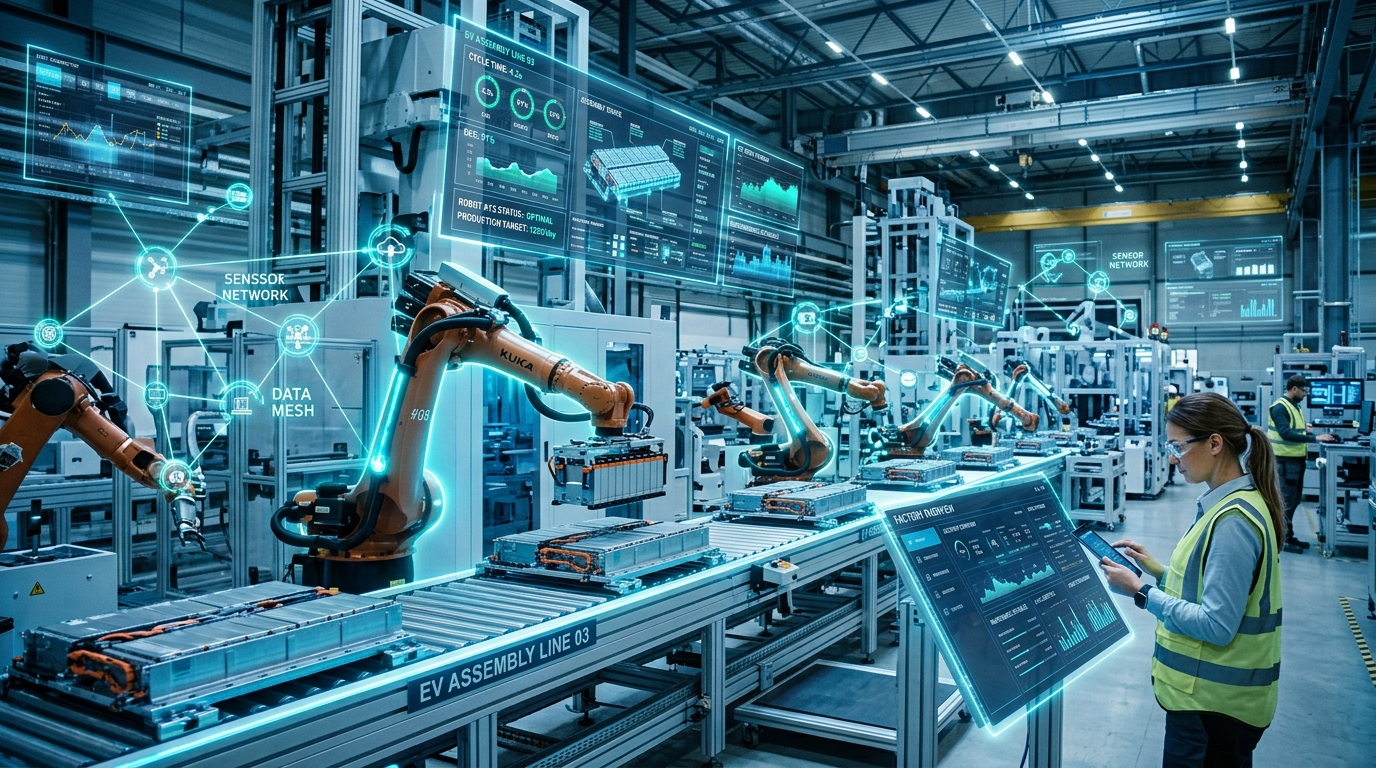
Introduction
Smart factory transformation has become the defining competitive advantage in modern manufacturing. Organizations that master this transition will lead their markets; those that don’t will struggle to keep pace. Yet one fundamental principle underpins every successful smart factory transformation initiative: you cannot improve what you cannot measure. This essential truth shapes every organization’s journey toward industrial excellence and sustainable operations.
For years, manufacturers purchased sophisticated technology with genuine enthusiasm but limited strategic direction. They implemented systems, deployed equipment, and waited for transformation to happen. Unfortunately, smart factory transformation rarely occurs through acquisition alone. The critical missing ingredient? Know-how—the organizational understanding and human capability that transforms tools into genuine competitive advantage.
Understanding Your Current Manufacturing Position
Before progressing forward, organizations must first assess their current state honestly. Leading manufacturing nations have established globally-benchmarked readiness assessments that evaluate maturity across three critical dimensions:
Smart Factory Transformation Requires Process Excellence Assessment
The first dimension examines operational capability. This includes supply chain integration, production management, and product lifecycle coordination. Organizations performing well here have optimized their core manufacturing processes before adding technology layers.
Technology Deployment in Smart Factory Transformation
The second dimension focuses on digital infrastructure. Key areas include automation systems, connectivity architecture, and intelligent platform integration. However, having technology available differs dramatically from using it effectively.
Organizational Capability and Talent Readiness
The third dimension—often overlooked—addresses human capability. This encompasses talent development, structural alignment, and leadership competency. Organizations excelling here understand that technology adoption succeeds only when people understand how to use it strategically.
The current reality across Asia reveals a sobering picture: most facilities operate at foundational levels. Manufacturing across the region averages a 2.1 maturity score on a 5-point scale. Additionally, Asia’s overall digital readiness lags behind Europe and North America, creating both challenge and opportunity for forward-thinking leaders.
The Five-Stage Path to Smart Factory Transformation
Smart factory transformation follows a predictable progression through five distinct stages. Understanding where your organization sits on this journey informs strategic decision-making.
Stage 1: Foundational Digital Presence
At this initial stage, basic systems operate independently. Digital integration remains limited, and data utilization is minimal. Organizations here capture information without extracting meaningful insight.
Stage 2: Structured Approach Emerges
This stage introduces enhanced infrastructure and foundational process automation. Early data analytics initiatives begin generating initial insights. Different systems start connecting, though integration remains incomplete.
Stage 3: Streamlined Integration Takes Hold
Moving to this level requires interconnected processes and efficiency improvements. Continuous improvement culture begins emerging naturally. Organizations here demonstrate noticeable productivity gains from digital initiatives.
Stage 4: Proactive Operations Management
At this advanced stage, sophisticated digital tools support data-driven decision-making. Competitive agility becomes evident in how quickly organizations respond to market changes. Predictive capabilities replace reactive problem-solving.
Stage 5: Industry Leadership Through Smart Factory Transformation
Finally, industry leaders achieve fully optimized operations with embedded innovation culture. Predictive and prescriptive capabilities guide decisions. Continuous improvement becomes organizational DNA rather than program.
The critical question isn’t whether organizations can reach the highest stage—many already have. Rather, the question becomes: how rapidly can your organization progress, and how sustainable is your transformation journey?
The Real Cost of Smart Factory Transformation: Lower Than Expected
One persistent myth prevents organizational action: smart factory transformation requires massive capital investment and years to implement. This misconception overlooks significant evidence to the contrary.
Consider an actual automotive parts manufacturer’s implementation. Within just four weeks, this facility achieved comprehensive data collection, real-time operational visualization, and actionable manufacturing intelligence. The investment breakdown revealed:
- Industrial gateways and edge computing devices: under $1,700
- Computing equipment: approximately $1,200
- Software systems: completely open-source and free
- Implementation timeline: four weeks
- Core team: three training programs, three managers, three engineers
Total capital investment: under $1,800 USD for a fully functional, productive system generating immediate measurable improvements.
The components involved nothing exotic or proprietary. Standard industrial gateways collected data. Conventional edge computing devices processed information locally. Open-source databases stored structured information. Visualization platforms rendered data understandable. Time-series analytics tools extracted insight.
Moreover, this same organization reported minimum productivity improvements of 10% within the first quarter. Manufacturing quality increased. Production planning became more accurate. Equipment maintenance shifted from reactive to predictive.
The barrier preventing smart factory transformation isn’t cost—it’s organizational knowledge and understanding.
Why Data Automation Matters: Foundation for Everything Else
Modern industrial environments generate staggering volumes of data continuously. Sensors on equipment, connected systems, and operational records create information overload. The genuine challenge isn’t collection—it’s meaningful transformation.
Data moves through six progressive maturity levels on the path to operational intelligence:
Level 1: Data Generation and Collection
Raw data capture begins at the source. Sensors mounted on equipment, connected systems, and manual entry points all contribute. However, volume alone creates no value without subsequent processing.
Level 2: Visual Data Representation
Making data visible through dashboards and displays transforms abstract numbers into comprehensible patterns. Operators and managers suddenly understand what’s happening in operations.
Level 3: Strategic Data Storage
Efficient, accessible data repositories enable historical analysis and trend identification. Cloud and edge storage solutions support both immediate access and long-term retention.
Level 4: Data Formulation and Structuring
Preparing data for analysis ensures availability, performance, and quality. Proper structuring determines whether subsequent analytics yields reliable insight.
Level 5: Progressive Analytics Evolution
Analytics mature through stages: descriptive (what happened), diagnostic (why it happened), predictive (what will happen), and prescriptive (what should we do). Each level delivers greater business value.
Level 6: Intelligent System Integration
Deep learning and adaptive systems represent the final frontier, where algorithms continuously improve themselves without human intervention.
Most organizations fixate on Stages 1-3 while neglecting the progression toward analytical maturity. A facility with perfect data collection but no analytical capability simply maintains expensive information storage.
The AI Advantage: From Generative to Agentic Systems
The artificial intelligence landscape has shifted dramatically in recent years. Early breakthroughs in large language models captured headlines and imagination. However, the real industrial revolution stems from agentic AI—systems that observe, reason, decide, and act autonomously within carefully defined parameters.
This distinction matters profoundly for manufacturing:
Generative AI for Industrial Innovation
Generative systems answer “what could this be?” They create content, generate ideas, and explore possibilities. While valuable for planning and ideation, they don’t drive direct operational improvement.
Agentic AI for Operational Excellence
Agentic systems answer “what should we do about this?” They function within manufacturing environments, making autonomous decisions within established guardrails. Computer vision systems automatically detect defects. Predictive models identify equipment failure before it occurs. Adaptive control systems optimize production parameters continuously.
These aren’t futuristic concepts or theoretical research projects. They’re operational reality in leading facilities today, delivering measurable return on investment within months rather than years.
Building Sustainable Smart Factory Transformation: The Missing Piece
Digital transformation fails when approached as a technology project rather than as an organizational journey. Success requires systematic progression through a proven framework.
Step 1: Identify Your Current Manufacturing State
Begin with honest assessment of where you stand. Evaluate process maturity, technology capabilities, and organizational readiness across all three dimensions. External assessment often reveals blind spots internal teams miss.
Step 2: Establish Ambitious Yet Realistic Goals
Clarity regarding business objectives shapes technology decisions. Consider how digital maturity supports revenue growth, cost reduction, and competitive positioning. Without clear business purpose, technology investments become wasteful.
Step 3: Prioritize Funding for Both People and Projects
Allocate resources to talent development alongside lighthouse projects. Early wins generate confidence and build organizational momentum.
Step 4: Develop Internal Champions and Ambassadors
Creating ambassadors who understand both technology and business context accelerates adoption. These individuals become change agents, influencers, and knowledge multipliers.
Step 5: Start Small With Proof-of-Value Projects
Beginning with limited-scope initiatives that demonstrate capability builds organizational confidence. Success breeds support for larger initiatives.
Step 6: Build Self-Reinforcing Workflows and Processes
Establish routines that support continuous improvement naturally. Make optimization business-as-usual rather than special initiative.
Step 7: Grow Continuous Improvement Culture
When innovation becomes embedded in organizational DNA, transformation becomes sustainable. Systems and processes that worked yesterday don’t automatically work tomorrow.
Step 8: Snowball Success Into Expanded Initiatives
Each successful project enables the next. This acceleration compounds over time, dramatically compressing transformation timelines.
Step 9: Develop Internal Expertise and Capability
Building organizational knowledge ensures self-sufficiency. Dependency on external consultants eventually limits scaling and adaptation.
Step 10: Adopt Agile Methodology Over Rigid Planning
Embrace adaptive approaches that respond to changing circumstances rather than fixed plans that become obsolete quickly.
The Sustainability Imperative: Green Operations by Design
Digital transformation and environmental sustainability aren’t separate initiatives—they’re deeply intertwined and mutually reinforcing.
Modern sustainability frameworks recognize responsibility across four integrated dimensions:
Strategy and Climate Risk Management
Understanding climate impact, transition risk, and regulatory landscape shapes technology choices. Organizations proactively managing climate risk outperform peers eventually.
Operational Excellence Through Resource Optimization
Reducing resource consumption and minimizing waste simultaneously improves efficiency and sustainability. Energy monitoring systems identify waste. Production optimization reduces material usage.
Supply Chain Transparency and Resilience
Digital tools provide unprecedented visibility into supply chains. Real-time tracking enables emissions measurement. Supplier engagement becomes data-informed rather than assumption-based.
Product Lifecycle Thinking and Circular Economy
Designing products for longevity, recyclability, and circular reuse extends value while reducing environmental impact. Digital tools enable lifecycle assessment and continuous improvement.
Organizations embedding sustainability into digital strategy from inception achieve superior outcomes. They reduce emissions while improving efficiency. They minimize waste while enhancing quality. They strengthen supply chains while building resilience.
Technology exists to support this integration. Open-source platforms enable real-time emissions tracking. IoT sensors monitor resource consumption continuously. AI systems optimize complex supply chains intelligently. Cloud platforms provide infrastructure for transparency and accountability.
Why Know-How Trumps Hardware: The Human Factor
Here’s an uncomfortable truth often overlooked: technology without understanding creates expensive mistakes.
Organizations purchasing sophisticated manufacturing execution systems without understanding their own processes simply execute the wrong processes faster and more expensively. Those implementing predictive analytics without building analytical literacy misinterpret signals consistently. Facilities deploying robots without reimagining human roles face resistance rather than enablement.
Transformation leaders understand this fundamental reality. Therefore, they invest heavily in capability building alongside technology deployment. They develop internal expertise deliberately. They create innovation hubs where teams learn by doing. They establish partnerships with organizations further along the maturity curve.
This insight reveals the true success formula: old process + new technology + organizational know-how = sustainable competitive advantage.
Looking Forward: Five-Year Technology Trends
Several technology trends will reshape manufacturing over the coming years:
Agentic Artificial Intelligence Moves From Research to Operations
Autonomous systems will manage increasingly complex manufacturing processes. Machine decision-making will supplement and eventually replace human decisions in many operational areas.
New Frontiers in Computing Transform Infrastructure
Edge processing and distributed computing reduce dependency on centralized cloud infrastructure. Local data processing improves response times and resilience.
Human-Machine Synergy Deepens Collaboration
Robots and humans increasingly work as collaborative partners. Automation handles routine work while humans contribute creativity and judgment.
Polyfunctional Robotics Expand Capability and Flexibility
Beyond single-purpose robotic arms, adaptive systems handle multiple tasks. Flexibility increases manufacturing responsiveness significantly.
Sustainable Technology Becomes Standard Practice
Carbon tracking and reduction integrate into operational systems naturally. Sustainability shifts from compliance requirement to competitive advantage driver.
Organizations beginning their digital maturity journey today position themselves to leverage these trends effectively. Those delaying transformation will find themselves perpetually catching up to a moving target.
The Strategic Path Forward: Assessment Through Acceleration
The route to sustainable smart factory transformation follows a clear, proven pattern that successful organizations implement:
ASSESS — Evaluate current maturity across process, technology, and organizational dimensions using globally-benchmarked frameworks. Honest assessment reveals both capabilities and gaps.
ALIGN — Build organizational commitment and develop capability through structured programs creating internal champions and expertise. Alignment ensures sustainable adoption.
ACCELERATE — Drive structured transformation through proven methodologies creating early wins, building confidence, and establishing momentum. Acceleration compounds as capabilities mature.
This represents more than a one-time project. It becomes an operating model—a systematic approach to continuous improvement embedded in organizational culture.
Conclusion: Seizing the Smart Factory Transformation Opportunity
The industrial revolution powered by data, analytics, and intelligent systems isn’t approaching—it’s already here. Organizations that understand this reality and take action today will lead their markets tomorrow. Those delaying will spend the next five years catching up.
The encouraging news? Entry barriers are lower than ever before. Open-source tools provide sophisticated capabilities. Proven methodologies reduce implementation risk. Partnerships compress timelines dramatically.
What remains is the essential decision: Will your organization lead in this transformation, or follow behind?
The answer starts with a single step—an honest assessment of current capabilities and the commitment to build the organizational know-how that truly transforms tools into lasting competitive advantage.
The era of technology for its own sake has ended. The era of purposeful, strategic, sustainable smart factory transformation has begun. Your choice determines whether your organization leads or lags.
We look forward to hearing from you. Contact us today so that we can help you with our YGL NERVO which is strategy Industry 4.0 ready implementation needs heading towards Industry 4.0 in smart warehouse and smart manufacturing.
YglWorld PG (HQ)
35, SCOTLAND ROAD
10450 Penang Island
YglWorld KL
Suite 9-10
Wisma UOA II,
Jalan Pinang 50450
Kuala Lumpur